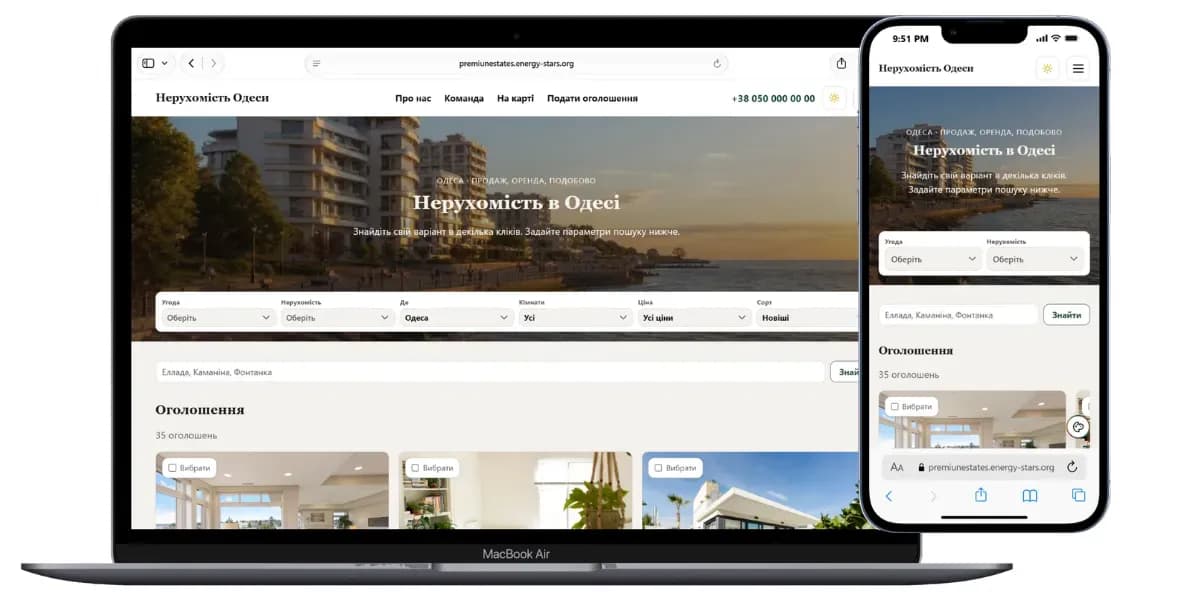
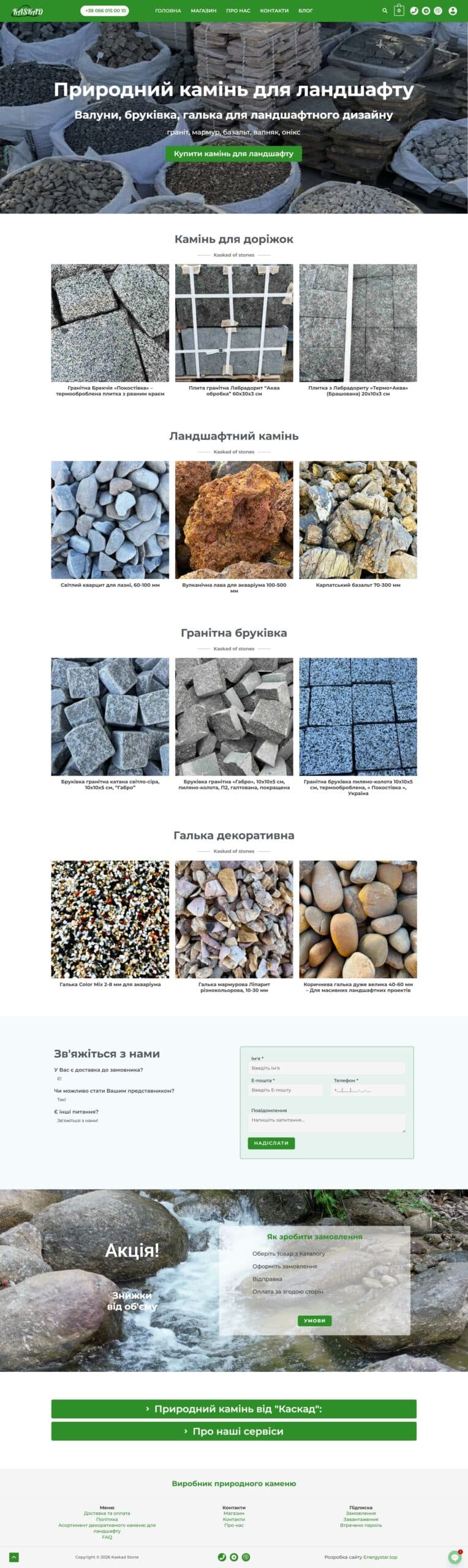
WordPress with a custom theme and Custom Fields (ACF or Carbon Fields) works well for a catalog of up to a few thousand items with standard filters and request forms. You get convenient fields for specifications and files, imports from spreadsheets and a quick launch. If you later need to sell online, WooCommerce can be added to such a catalog.
We choose Next.js when the catalog needs a configurator, pricing based on a complex formula, prices linked to exchange rates, API integration with your accounting system or very fast filters across a large range. That's how we built Rich Wood, a real project for a manufacturer of solid-wood stairs, doors and furniture: a catalog, a staircase configurator with price calculation, SEO hubs for cities across Ukraine and a PageSpeed score of 100 on mobile.
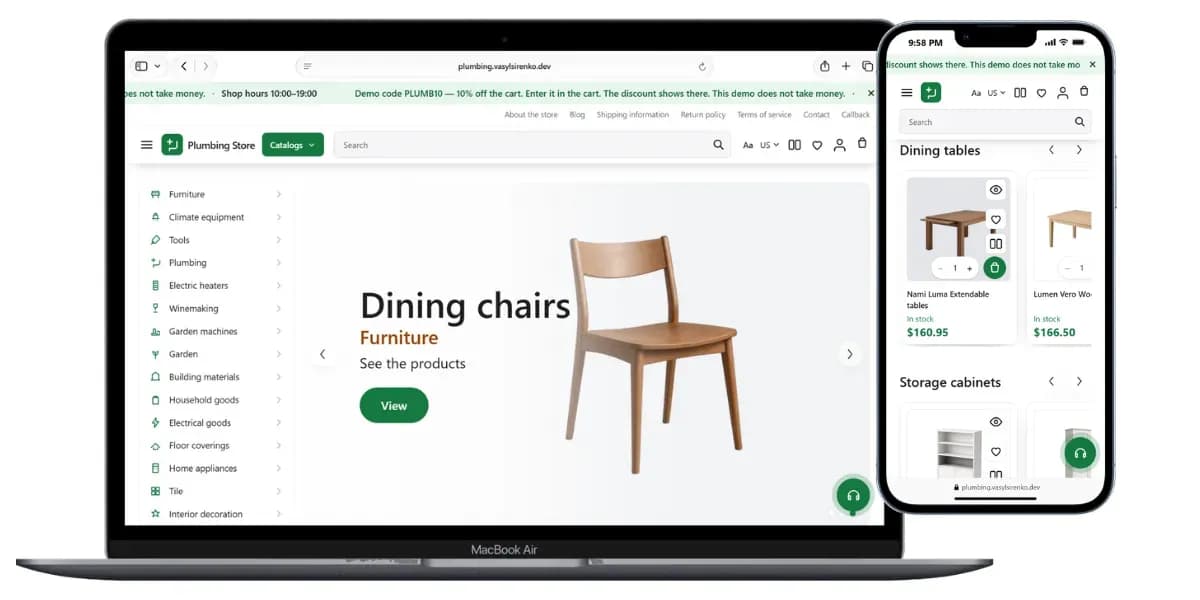
Our demo project Plumbing Store also illustrates a large multi-regional catalog: 18 catalogs and 7 regional storefronts on Next.js and Medusa.