European standards · Development ·
Website development standards in Europe
A site for clients in Europe should say who you are, why a form collects data, and keep marketing cookies off until the person chooses. This is not legal advice.
This article is currently available in its original language.
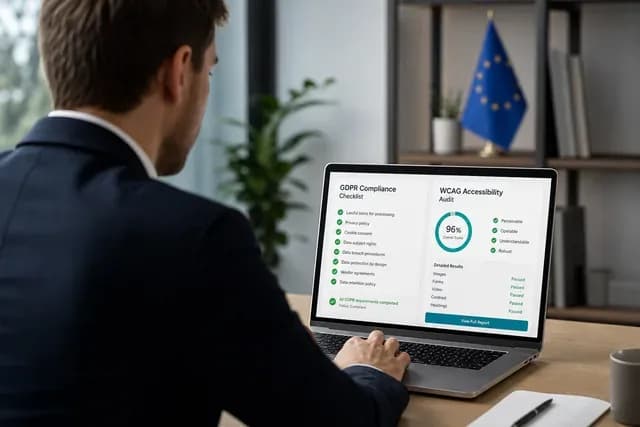
A client in the EU or the UK opens a site the same way as anywhere else: on a phone, with a specific question. They also expect to see who is behind the page and what happens to the data from the form. Below is what we build in. It does not replace a conversation with a lawyer in your jurisdiction.
Who you are and why the form exists
The site shows a legal name or a clear business name, a country and a way to get in touch. Next to the form: why you ask for a name and a phone — to answer the enquiry, not “for marketing in general”. The policy link goes to a real page, the way the privacy policy does on this site, not to nowhere.
Cookies, access, trust
Cookies the site needs in order to work and marketing cookies are different. The second kind turns on after a choice, not before it. Text has contrast, a button works from the keyboard, a form error is written in words. Prices and terms are not hidden inside an image. HTTPS is on. Terms of work, if you publish them, live on their own page — here that is the terms.